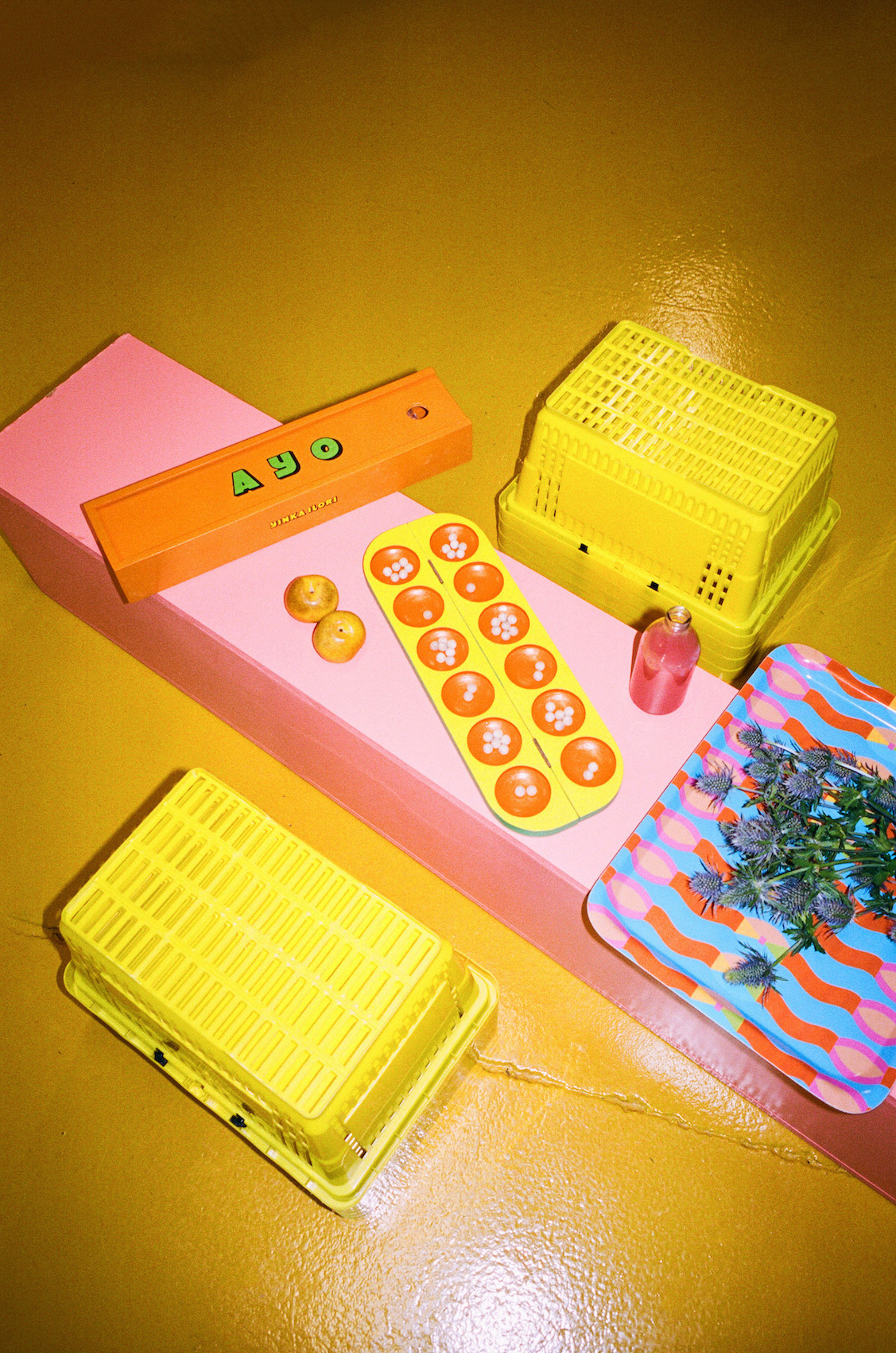
AYO GAME
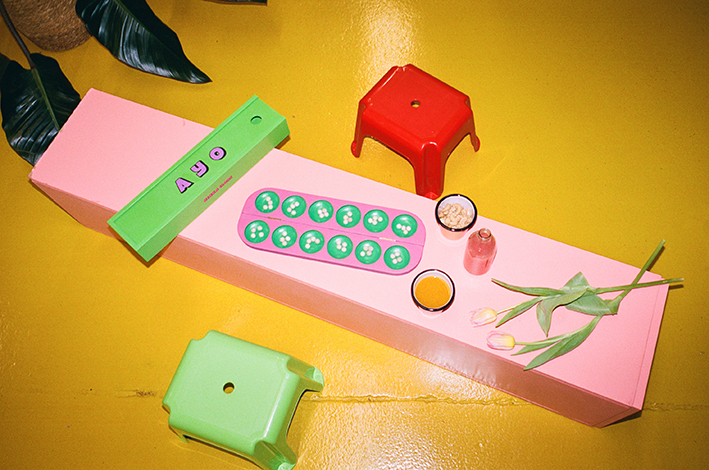
Yinka Ilori invited Jareh Das, an Independent Curator, Writer, Researcher, and occasional Florist who lives and works between West Africa/the UK to reflect on her experiences of Ayo, a Nigerian traditional board game played by two people on a semi-rectangular hand-carved wood box with seeds.
Ayo, or rather Ayò Ọlọ́pọ́n as it is known in Yoruba and loosely translates in English as “Seeds in the Holder” is a traditional mancala game played across generations in Nigeria. I became enthralled by this two-player game during my childhood, although I can't quite remember if I first encountered it in Ibadan, where my mother worked, or Warri, at my uncle's which has its own version called Oware. The board game is etched in my childhood memories of vacationing in these two cities. A time for play, adventuring, wonder and curiosity. A time also for exploring the unfamiliar outside of my Lagosian upbringing.
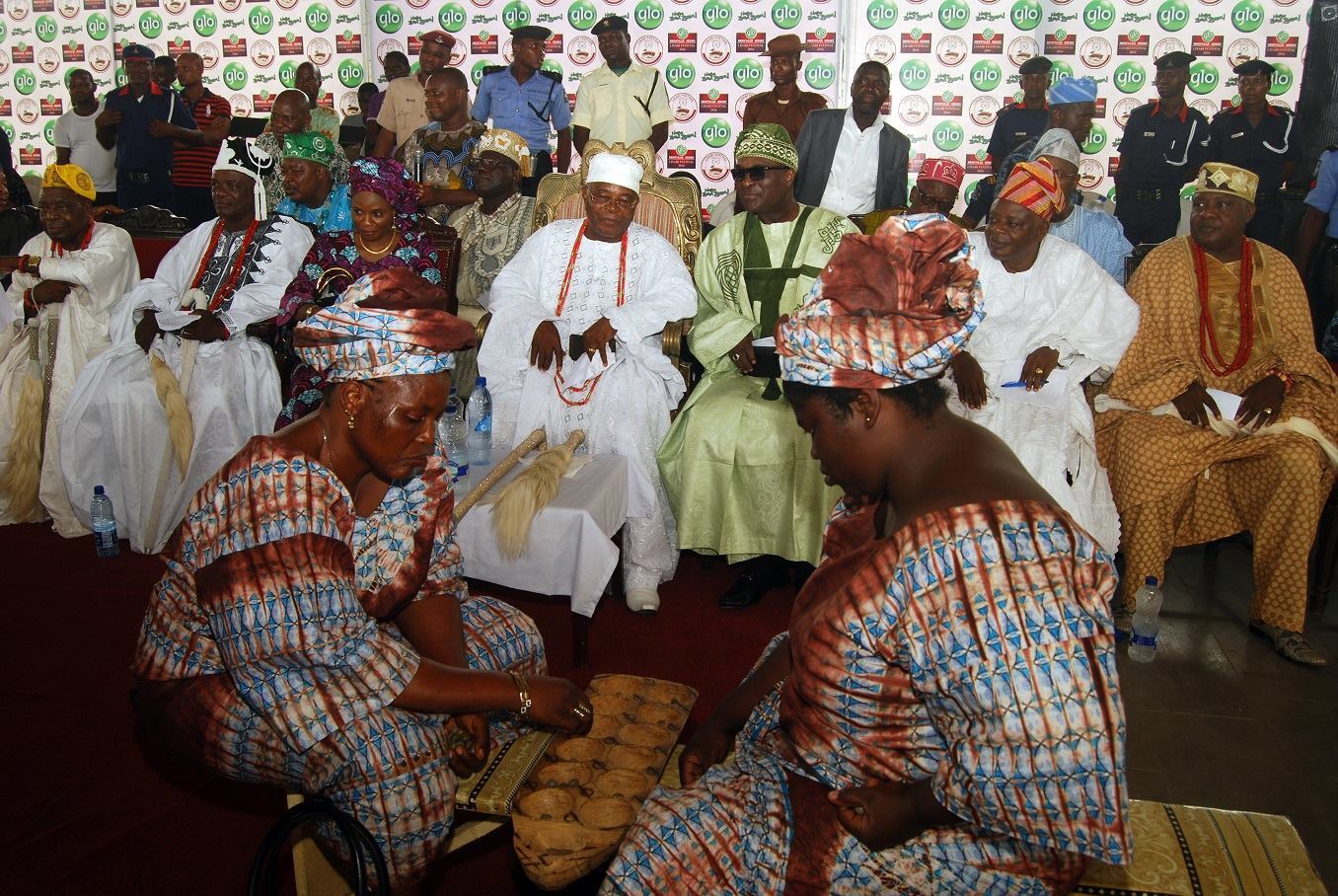
Picture from the Women's Final of the Ayo Game for 2016 Lisabi Festival sponsored by Glo: (L-R) Winner Ronke Lawal who represented Abeokuta South LG squaring up with the 1st Runner Up, Sadiat Sokunbi from Ifo LG at the Lisabi Stadium Ake Palace grounds on Tuesday, 1st March, 2016
Two players sit across each other and proceed to open a wooden box with two rows and twelve holes (six on each side) containing forty-eight Ayo seeds (four in each hole). To begin, the first player picks all of the seeds from one of their holes and runs them counterclockwise. The opponent does the same, starting from their side. When the seed movement ends in a hole with four Ayo seeds on the opponent's side, the player “captures” those seeds. The objective is to “capture” all your opponent’s seeds to win the game by taking turns. If a player records three straight wins, they become a champion (ota). The loser (ope) quits, and a new player then takes over.

Ayo isn't just played across the African continent, it also exists in parts of Asia and the Americas (it is known as Kalah in America), yet its origin is traced as far back to the 16th-century BCE in the pyramid of Cheops where a version was carved onto stone tablets. Prior to using wood and seeds, holes were dug into the earth and stones were placed in them for play. History lessons aside, Ayo remains an intellectual game requiring numeracy skill, thoughtfulness, and a desire to win, and keep a winning streak going.